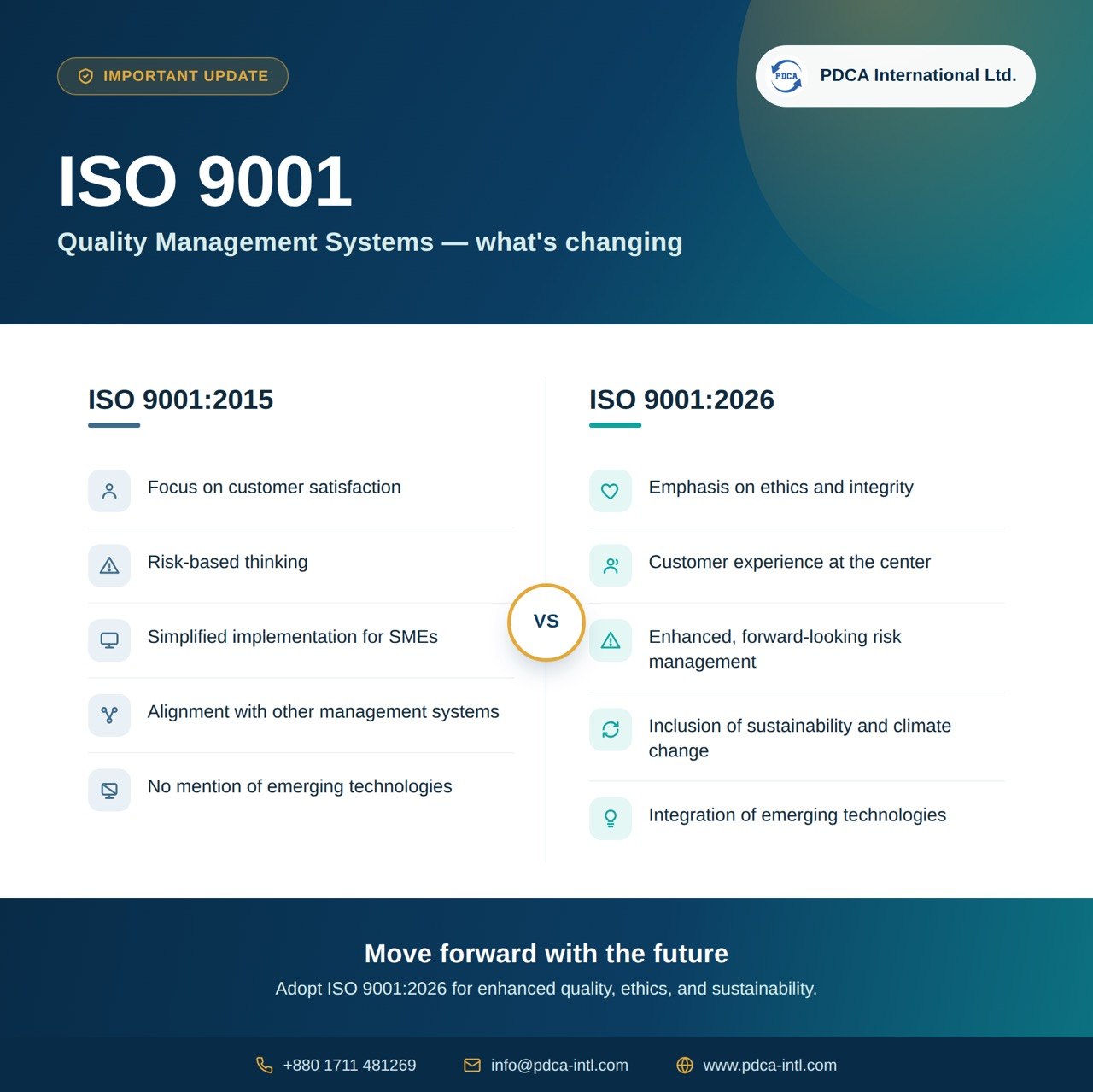
The International Organization for Standardization (ISO) published ISO 9001:2026 on 16 September 2026, introducing the latest edition of the world’s most widely used quality management system standard. Organizations certified to ISO 9001:2015 will need to transition to the new edition within the applicable transition period.
The revision modernizes and clarifies the standard rather than fundamentally changing its structure. It continues to use the Harmonized Structure shared with ISO 14001, ISO 45001, and other management system standards, supporting organizations that operate integrated management systems.
Existing quality management system documentation, manuals, procedures, and document numbering do not automatically need to be changed, provided they continue to meet the requirements of ISO 9001:2026.
• Organizational context: Greater emphasis on understanding internal and external issues that can affect the organization’s ability to achieve intended quality outcomes.
• Interested parties: Organizations need to maintain a clearer understanding of relevant interested parties and their applicable requirements.
• Climate change: Climate change considerations are incorporated into the understanding of organizational context and relevant risks and opportunities.
• Leadership: Greater emphasis on leadership responsibility, accountability, and the integration of quality objectives into the organization’s strategic direction.
• Risk and opportunity: Risk-based thinking is further clarified, encouraging organizations to systematically identify and address risks and opportunities that may affect quality performance.
• Planning and change: Stronger emphasis on managing changes to the quality management system in a planned and controlled manner, considering potential consequences and maintaining the integrity of the QMS.
• Operational control: Greater clarity around managing processes, externally provided processes, and controls needed to consistently deliver conforming products and services.
• Performance evaluation and improvement: Continued emphasis on monitoring, measurement, analysis, evaluation, corrective action, and continual improvement to strengthen overall QMS performance.
For textile, apparel, and manufacturing exporters, ISO 9001:2026 provides a stronger framework for connecting quality management with business strategy, risk management, customer expectations, and operational performance.
Organizations already maintaining structured systems for production quality, supplier evaluation, customer complaints, corrective actions, process monitoring, and continual improvement will have a strong foundation for transition.
The new edition also provides an opportunity to move beyond maintaining ISO certification as a compliance exercise and use the QMS as a practical tool for business resilience, operational efficiency, customer satisfaction, and sustainable growth.
PDCA International Ltd. provides ISO 9001:2026 gap assessments, transition support, implementation, certification support, Lead Auditor training, and Internal Auditor training to help organizations confidently move from ISO 9001:2015 to ISO 9001:2026.
To discuss your transition plan, contact info@pdca-intl.com.
At PDCA International Ltd., we believe a healthy planet leads to healthier people. This World Environmental Health Day reminds us how our well-being i....
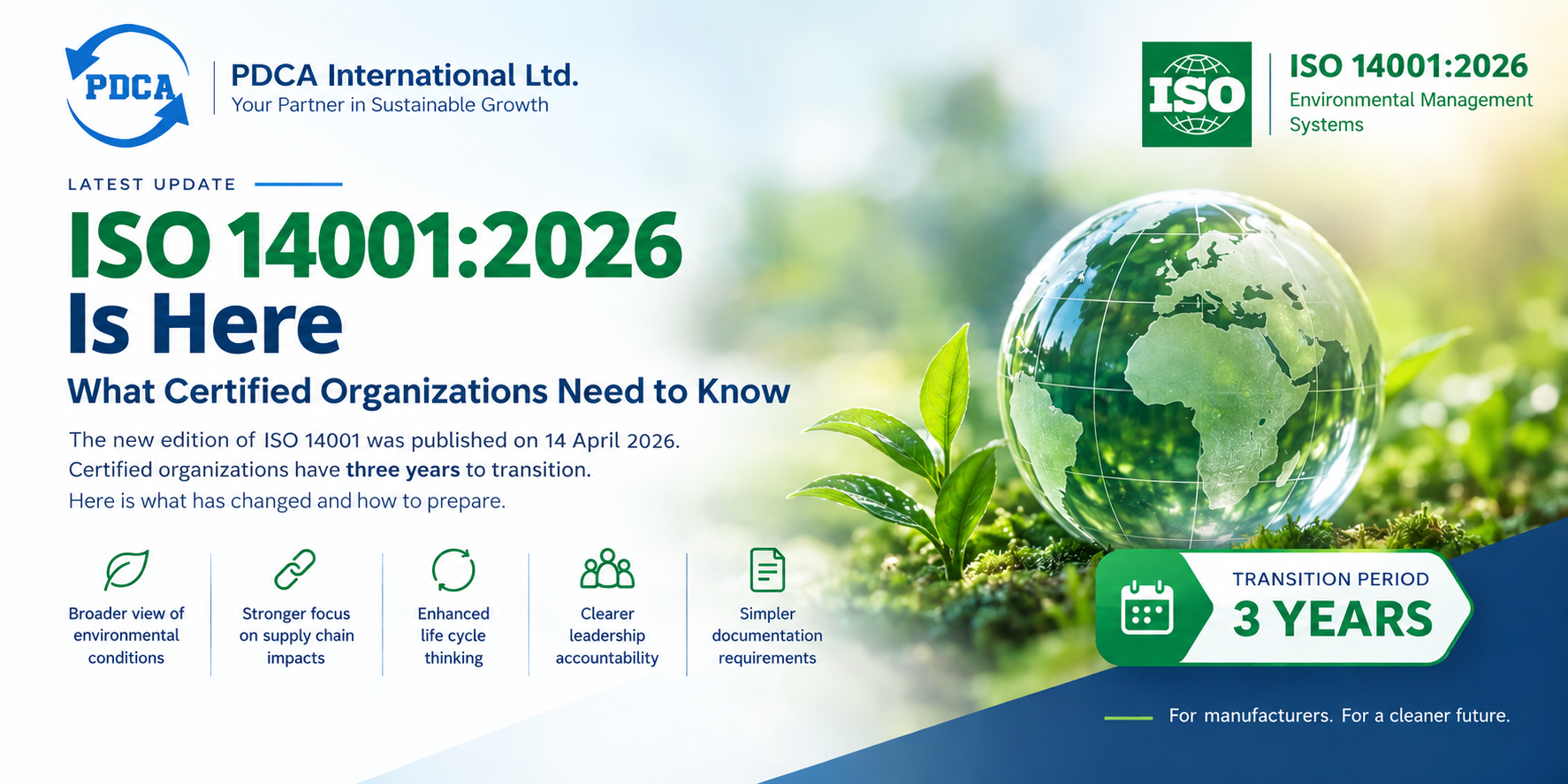
The new edition of ISO 14001 was published on 14 April 2026. Certified organizations have three years to transition. Here is what has changed and how....
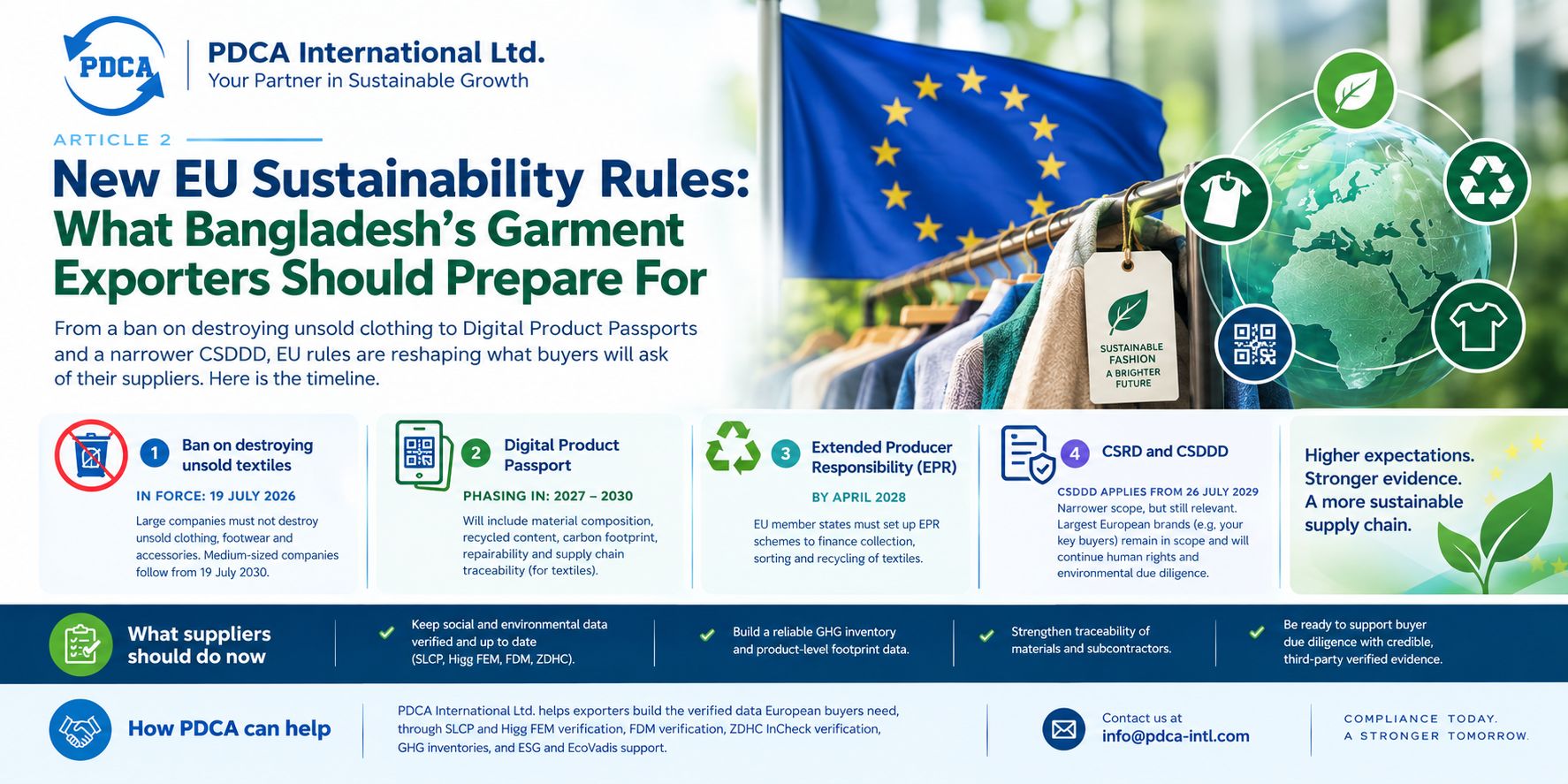
From a ban on destroying unsold clothing to Digital Product Passports and a narrower CSDDD, EU rules are reshaping what buyers will ask of their suppl....