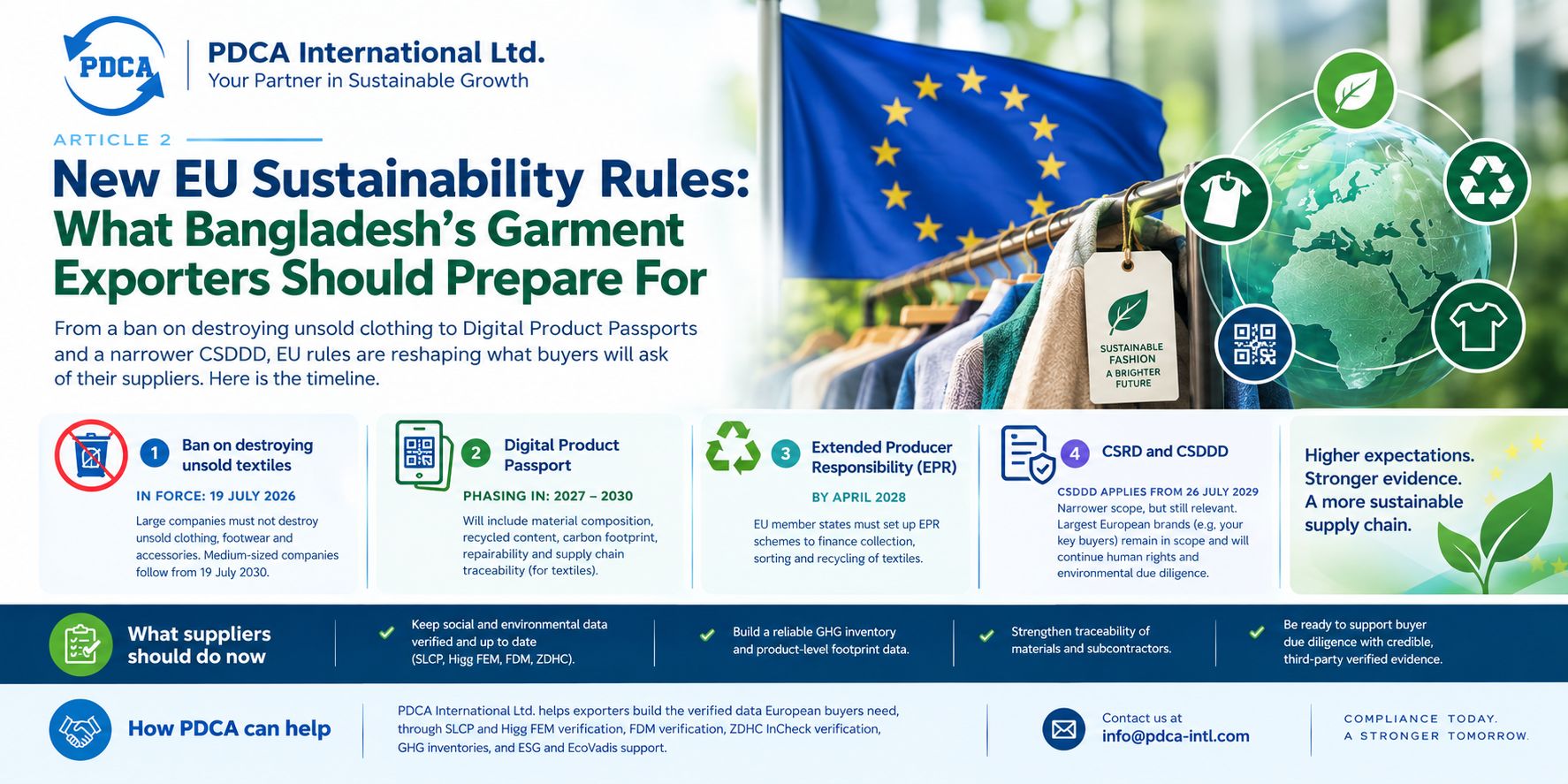
From a ban on destroying unsold clothing to Digital Product Passports and a narrower CSDDD, EU rules are reshaping what buyers will ask of their suppliers. Here is the timeline.
The European Union is Bangladesh’s largest export market for apparel, and its new sustainability rules are steadily changing what European buyers expect from their suppliers. Some rules apply to brands directly, but the data, evidence, and traceability they need comes from factories. Here are the key developments and dates.
Under the EU Eco-design for Sustainable Products Regulation (ESPR), large companies can no longer destroy unsold clothing, footwear, and fashion accessories. Medium-sized companies follow from 19 July 2030. Businesses must instead resell, donate, repair, or remanufacture products, and publish the quantities they discard and why. Expect buyers to tighten forecasting, order accuracy, and quality requirements to reduce unsold stock.
Every ESPR-regulated product will need a Digital Product Passport holding information such as material composition, recycled content, carbon footprint, repairability, and supply chain traceability. Textiles are expected to be phased in from around 2027 to 2030, after the specific rules are adopted. Suppliers will be asked for reliable, verifiable product and facility data.
EU member states must set up EPR schemes in which producers pay fees to finance the collection, sorting, and recycling of textiles. This raises the value of durable, recyclable products and accurate material information.
In December 2025 the European Parliament approved the “Omnibus I” package, which narrowed the scope of both laws. The Corporate Sustainability Due Diligence Directive (CSDDD) now applies to companies with more than 5,000 employees and more than €1.5 billion turnover, from 26 July 2029. Suppliers with up to 1,000 employees gain protection against excessive information requests. However, the largest European brands, the ones that source the most from Bangladesh, remain in scope and will still carry out human rights and environmental due diligence on their supply chains.
PDCA International Ltd. helps exporters build the verified data European buyers need, through SLCP and Higg FEM verification, FDM verification, ZDHC InCheck verification, GHG inventories, and ESG and EcoVadis support. Contact us at info@pdca-intl.com.
At PDCA International Ltd., we believe a healthy planet leads to healthier people. This World Environmental Health Day reminds us how our well-being i....
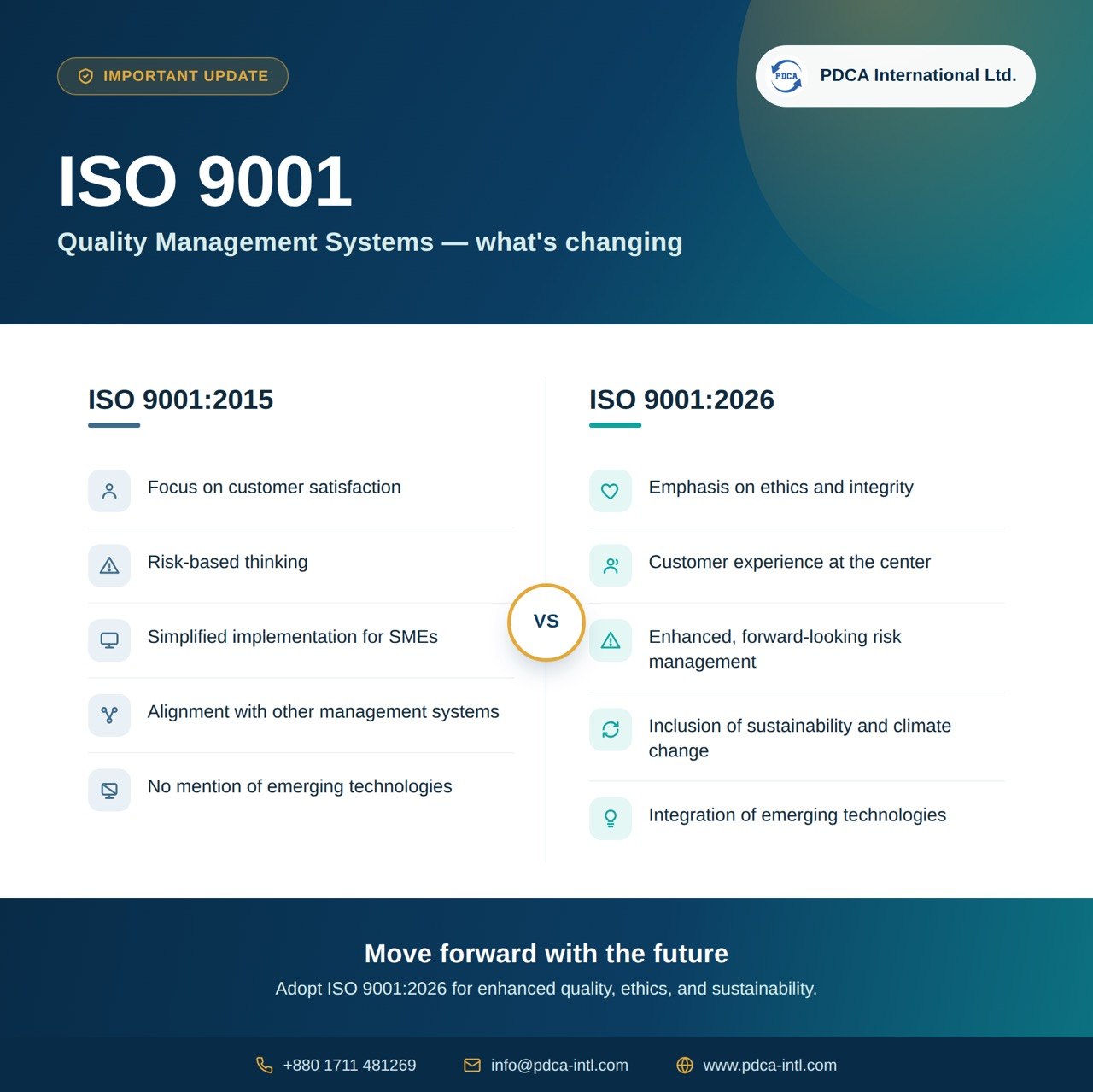
The International Organization for Standardization (ISO) published ISO 9001:2026 on 16 September 2026, introducing the latest edition of the world’s m....
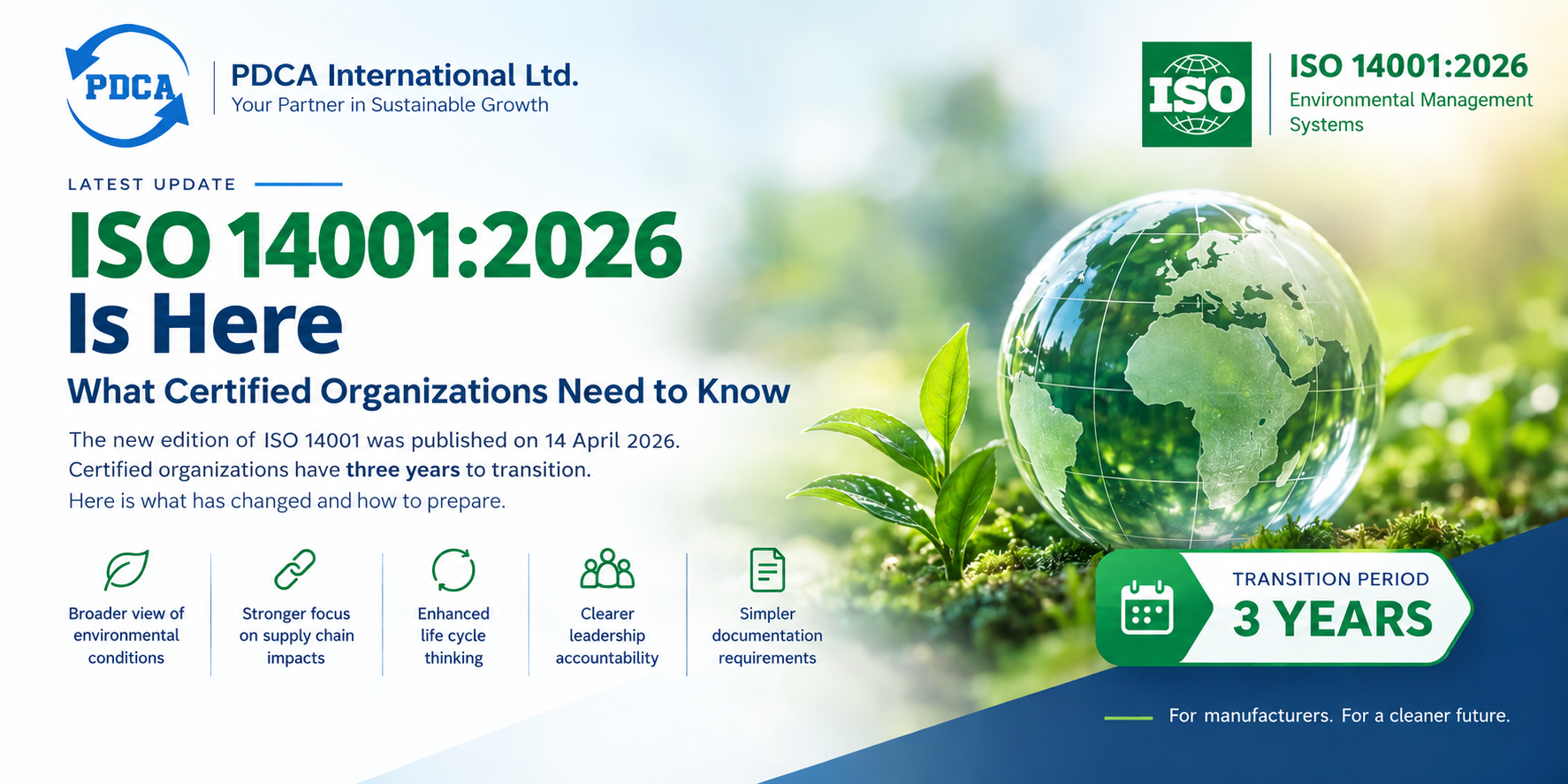
The new edition of ISO 14001 was published on 14 April 2026. Certified organizations have three years to transition. Here is what has changed and how....